Here are the key topics I will now research:
- AI, Digital Risks & Regulation:
- “The growing menace of deepfakes & how govt seeks to counter it with AI content labelling” (from ‘The Indian Express’).
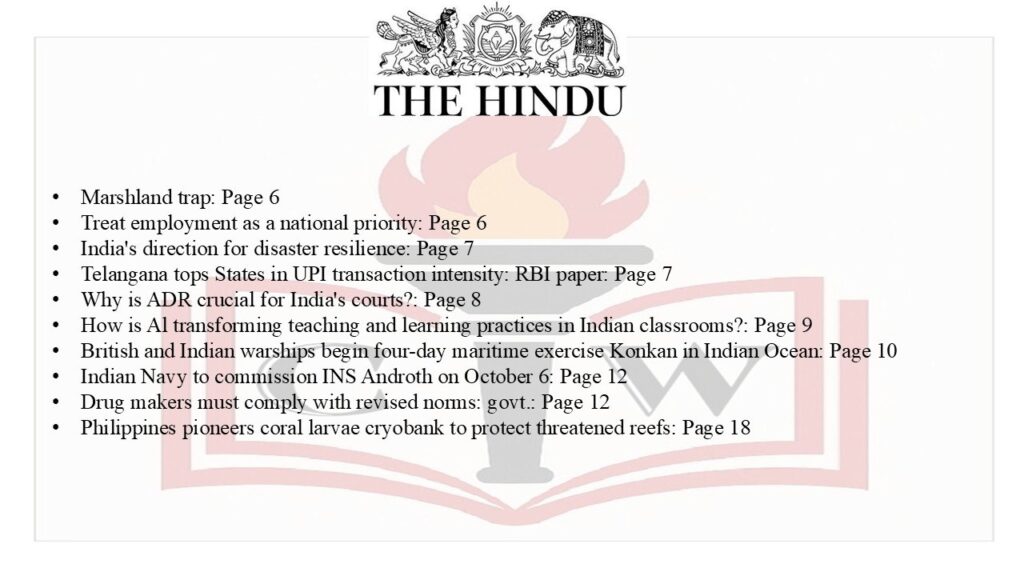
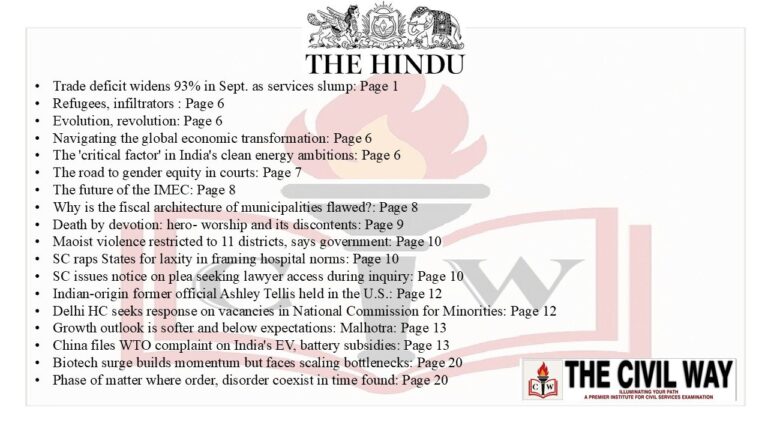
- “EC warns parties against misuse of AI-generated content during elections” (from ‘The Hindu’).
- “People running from pillar to post over ‘digital arrests’” (from ‘The Hindu’).
- Social Security & Public Health:
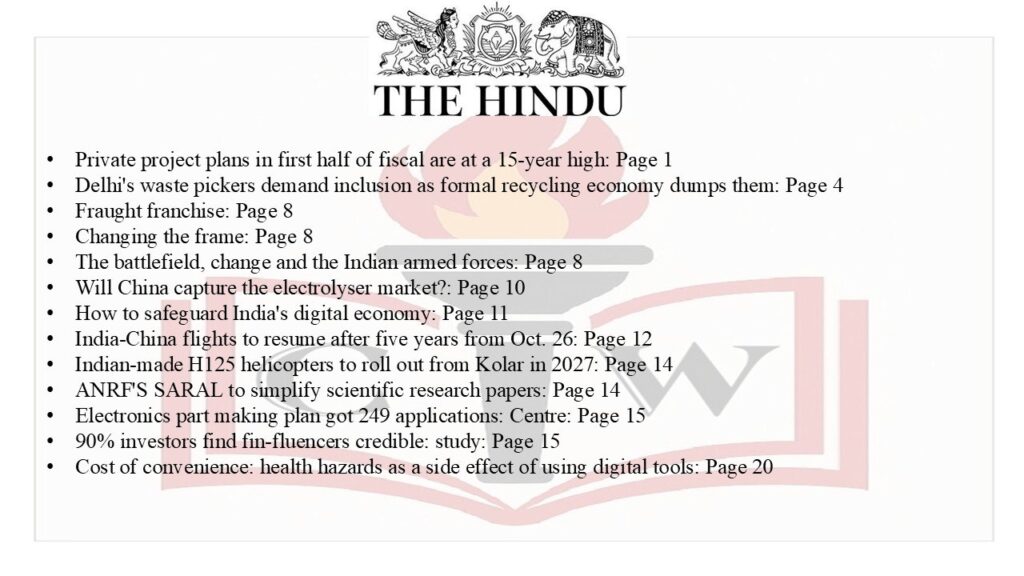
- “PF reforms enable social security” (from ‘The Indian Express’).
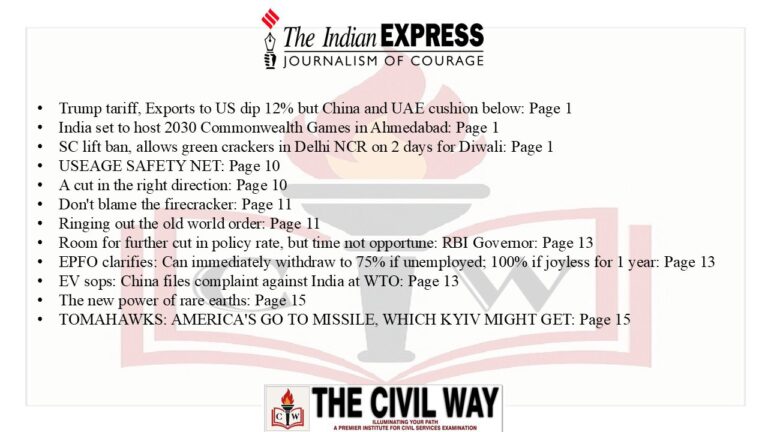
- “EPFO clarifies: Can immediately withdraw to 75% if unemployed; 100% if joyless for 1 year” (from ‘The Indian Express’).
- “Must utilising Ayushman Bharat to seek care in private hospitals: Report” (from ‘The Indian Express’).
- “Respect the health rights of India’s children” (from ‘The Hindu’).
- Governance & Judiciary:
- “2006 act restores livelihood, dignity of forest communities, Govt tells SC” (from ‘The Indian Express’).
- “Sanctuary status for forest of Saranda: why this matters, case before SC” (from ‘The Indian Express’).
- “Pendency issue in courts: Why SC flagged execution petitions” (from ‘The Indian Express’).
🏛️ Cluster 2: Governance, Society, and Key Policy Issues (Internal Affairs)
This cluster focuses on contemporary domestic challenges, including the regulation of new technologies, the expansion of social safety nets, and the role of the judiciary in governance and conservation.
1. AI, Digital Risks, and Regulation
The government and the Election Commission (EC) are focusing on regulatory measures to counter the threat of AI-generated content like deepfakes.
- Content Labelling and Removal: The Ministry of Electronics and Information Technology (MeitY) has mandated platforms to remove deepfakes within 36 hours. The proposed rules require mandatory labelling for all AI-generated content that appears authentic.
- For visual content, the label must cover at least 10% of the display area.
- For audio content, the label must be audible for at least 10% of the total duration.
- A permanent metadata identifier or watermark must be embedded for traceability.
- Election Integrity: The EC has issued directives requiring political parties to remove deepfake posts within three hours during the Model Code of Conduct (MCC). Parties are also warned not to publish AI-generated content that misrepresents a person’s identity, voice, or appearance without their consent, which is likely to mislead the electorate.
- ‘Digital Arrest’ Scams: The Supreme Court (SC) has taken suo motu (on its own motion) cognizance of the alarming rise in “digital arrest” frauds, where criminals impersonate law enforcement to extort money.
- The SC described the situation as grave, noting that Indians have lost an estimated ₹3,000 crore to such scams.
- The Court is demanding action to address the transnational nature of these crimes, which often originate from sophisticated “scam compounds” in Southeast Asia.
2. Social Security and Public Health
The government is actively reforming social security and monitoring the usage of public health schemes.
- PF Withdrawal Reforms (EPFO): The Employees’ Provident Fund Organisation (EPFO) has simplified withdrawal rules to provide faster relief and protect long-term pension eligibility.
- If unemployed, an employee can immediately withdraw 75% of their PF amount.
- The full 100% amount can be withdrawn after 12 months of continued unemployment.
- These changes aim to prevent frequent withdrawals that previously caused breaks in service and rejected pension cases.
- Ayushman Bharat Utilization: A report shows that the flagship health insurance scheme, Ayushman Bharat–Pradhan Mantri Jan Arogya Yojana (AB-PMJAY), is largely being utilized for care in private-sector hospitals, often at higher costs.
- While only 45% of the 31,005 empanelled hospitals are private, they account for 52% of all hospitalizations and nearly 66% of the total treatment costs (₹1.29 lakh crore) incurred under the scheme since its inception.
- The most frequently availed treatment under the scheme is haemodialysis (14% of all treatments).
- Children’s Health Rights: The right to health and nutrition for children is recognized as an integral part of the fundamental Right to Life under Article 21 of the Constitution. The Supreme Court, through various judgments (like the Mid-Day Meal Scheme directives), has directed governments to implement schemes that translate constitutional mandates into reality.
3. Governance, Environment, and Judiciary
The judiciary is actively engaged in matters concerning statutory rights, environmental protection, and judicial efficiency.
- Forest Rights Act (FRA), 2006: The Central government has filed a strong defense in the Supreme Court against a plea challenging the legal validity of the FRA.
- The government argues that the law goes beyond mere land title regularization to restore the dignity, livelihoods, and cultural identity of forest-dependent communities, correcting a “historical injustice”.
- It also rebuts the assertion that the rights granted to forest-dwellers conflict with wildlife and forest conservation, citing examples of communities that have traditionally preserved the ecosystem.
- Saranda Forest Sanctuary Status: The SC has been pressing the Jharkhand government to declare the ecologically rich Saranda forest a Wildlife Sanctuary, warning that it may issue a writ of mandamus (a judicial command) if the state fails to act.
- The case involves navigating the conflict between ecological preservation and mining interests, as the Court allowed existing mining operations by SAIL to continue while directing the state not to grant any fresh leases.
- Pendency in Courts (Execution Petitions): The Supreme Court flagged the “alarming” backlog of over 8.82 lakh execution petitions in courts across the country.
- Execution petitions are requests to enforce decrees and orders passed by civil courts.
- The Court stressed that delays lasting years render decrees meaningless and defeat the purpose of civil justice, directing all High Courts to ensure execution petitions are disposed of within six months.
Would you like to delve deeper into the legal and political implications of the digital risk and deepfake regulations, or move on to the next set of headlines?
Here is a video that details the new EPF rules, including the withdrawal conditions for unemployed individuals: New EPF Rules Explained: Full PF Withdrawal After One Year of Unemployment.