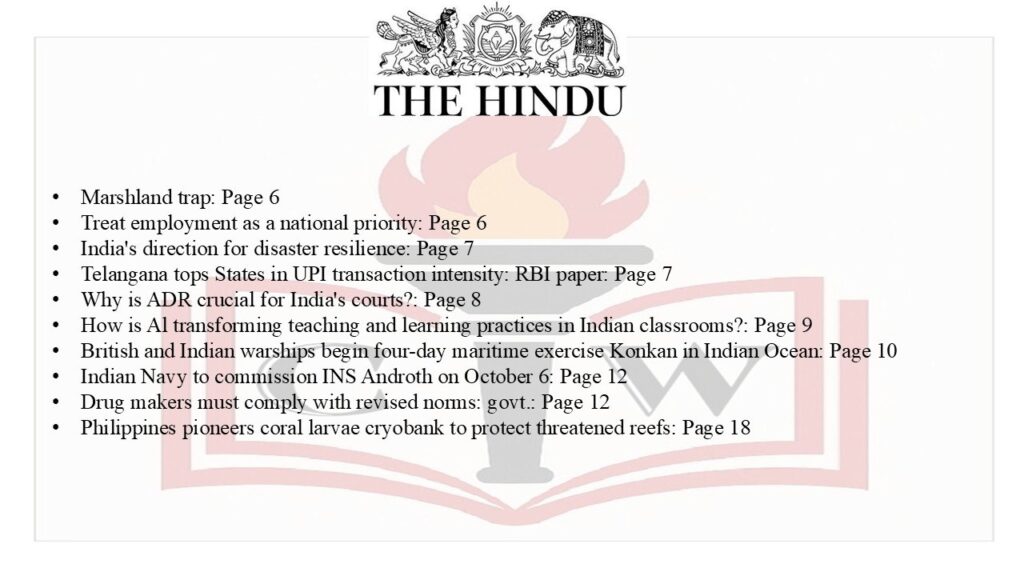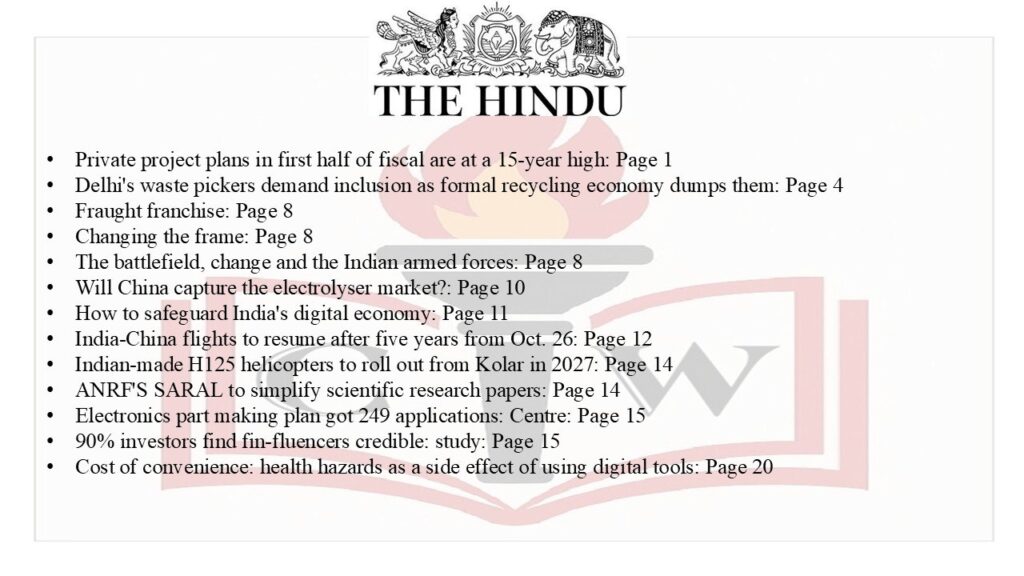
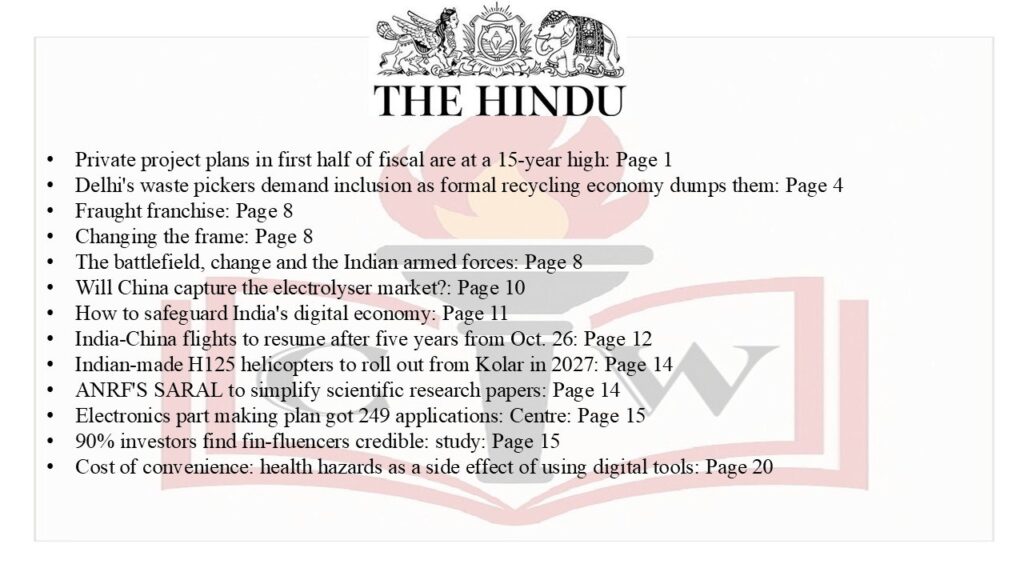
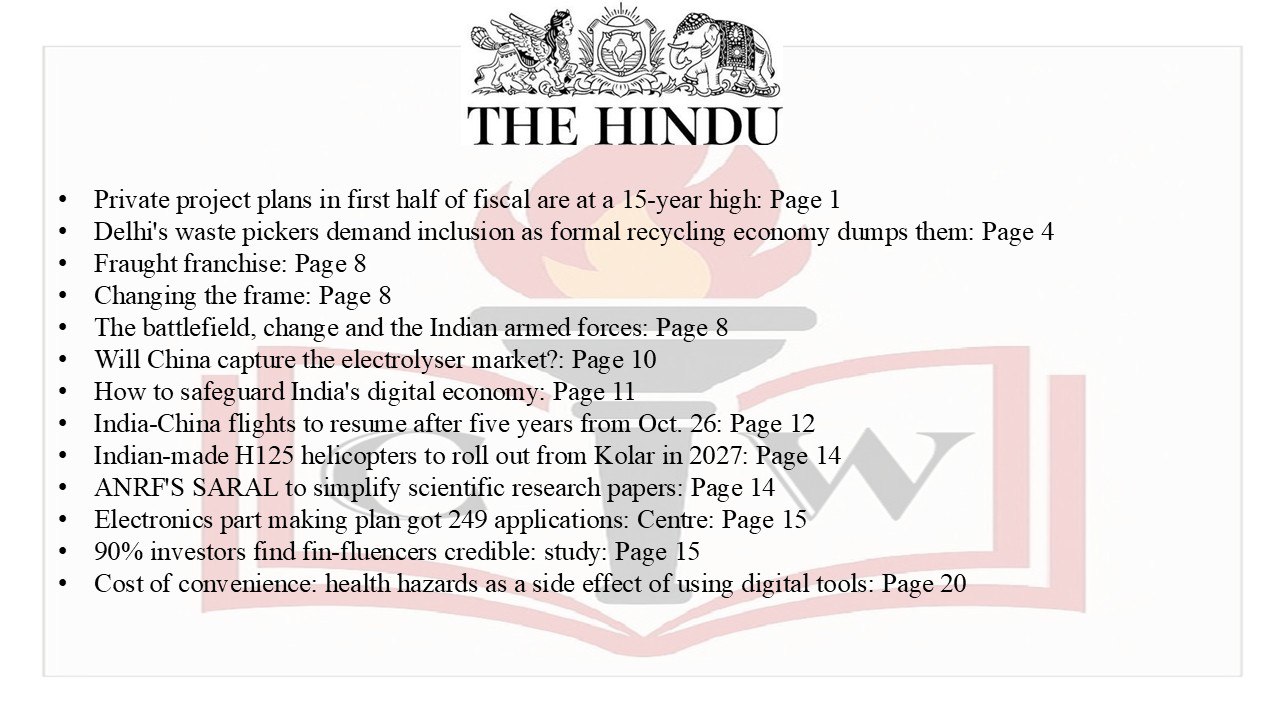
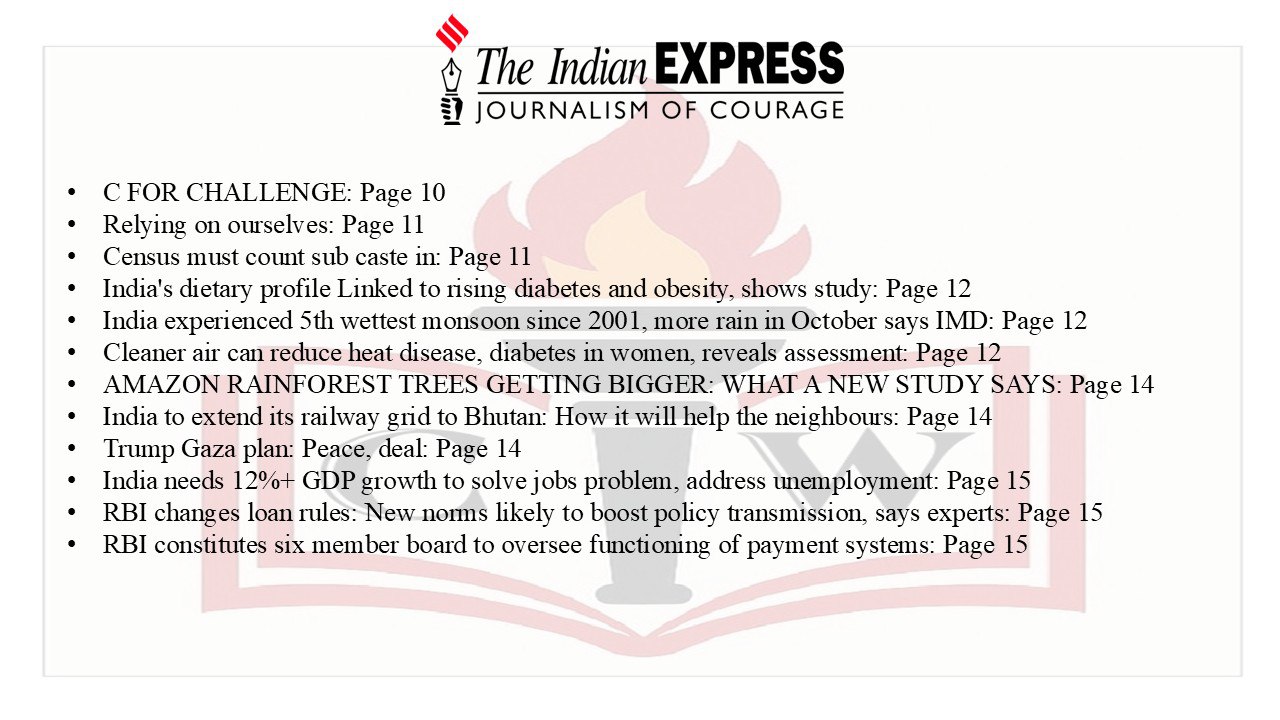
now synthesize the new information and present the final three strategic priorities, enhanced by the latest headlines.
🎯 Top 3 Policy Priorities for the Indian Government (Enhanced Synthesis)
The comprehensive analysis across all headlines reveals that the government’s strategic focus is heavily concentrated on three interconnected areas: (1) Economic Resilience against Global Headwinds, (2) Strategic Security & Technology Upgradation, and (3) Bridging the Implementation Gap in Governance and Social Policy.
Priority 1: Securing Economic Resilience and Growth
The challenge is to maintain a high-growth economy (IMF forecasts India’s growth at 6.6% in 2025) while dealing with external trade barriers and internal financial stability issues.
| Challenge Area | Key Development | Strategic Implication |
| Global Trade Barriers | India’s iron and steel exporters face the highest CBAM levy from the EU; China files WTO complaint against India’s EV subsidies. | Requires rapid industrial decarbonization (“The ‘critical factor’ in India’s clean energy ambitions”) and aggressive defence of domestic industrial policy at international forums. |
| Financial Stability | RBI may limit banks’ market exposure; RBI waits & watch amid uncertainty. | Signals caution on financial risks and a focus on maintaining stability to support policy transmission (“RBI changes loan rules: New norms likely to boost policy transmission”). |
| Digital Economy | UPI leads in payment volume; Telangana tops States in UPI transaction intensity. | Must sustain momentum in digital finance while the RBI urges central banks to promote CBDCs over stablecoins to secure the digital currency ecosystem. |
| Domestic Growth | “India needs 12%+ GDP growth to solve jobs problem, address unemployment”. | Employment must be treated as a national priority and industrial planning must be robust (Private project plans in first half of fiscal are at a 15-year high). |
Priority 2: Strategic Security and Technology Upgradation
This involves a rapid, indigenous overhaul of India’s military, space, and digital defence capabilities to meet both traditional and new-age security threats.
| Security Domain | Key Development | Strategic Implication |
| Defence Modernization | DAC grants AoN for capital acquisition proposals worth ₹79,000 crore for the Tri-services. | Commitment to indigenous production (e.g., Indian-made H125 helicopters to roll out from Kolar in 2027) and modernizing warfare (“Energy weapons, satellites, radar network key to Sudarshan Chakra”). |
| Space & Science | ‘90% of Gaganyaan development work done’. | Focus on high-stakes technology and ensuring safety (How does Gaganyaan’s vital crew escape system work?). This is part of a larger push for global leadership in science. |
| Cyber & AI Threats | EC warns parties against misuse of AI-generated content; “The growing menace of deepfakes”. | Requires proactive regulatory action to safeguard democracy, alongside boosting domestic capability (“Quantum leap by Indian researchers in boosting digital security”). |
Priority 3: Bridging the Governance and Social Implementation Gap
The judiciary is actively pushing the executive to fulfill its basic duties, highlighting systemic failures in enforcement, particularly at the state level.
| Governance Issue | Key Development | Strategic Implication |
| Judicial Enforcement Failure | SC raps States for no action on its order on stray dogs and for laxity in framing hospital norms. | The implementation gap remains a massive hurdle; the government must also clear the Forest Rights Act backlog (“Centre urges states to clear Forest Rights Act backlog; 15% claims pending”). |
| Cybercrime & Public Safety | SC takes action on people running from pillar to post over ‘digital arrests’. | Requires urgent, coordinated, pan-India police action to combat high-tech fraud and restore public trust. |
| Key Appointments & Oversight | Centre tells top court it will make CIC appointments in ‘two or three’ weeks. | Signals executive delay in filling crucial oversight positions, which is necessary for democratic accountability. |
This final summary provides a holistic view of India’s current policy landscape.