


- Environment & Climate Finance:
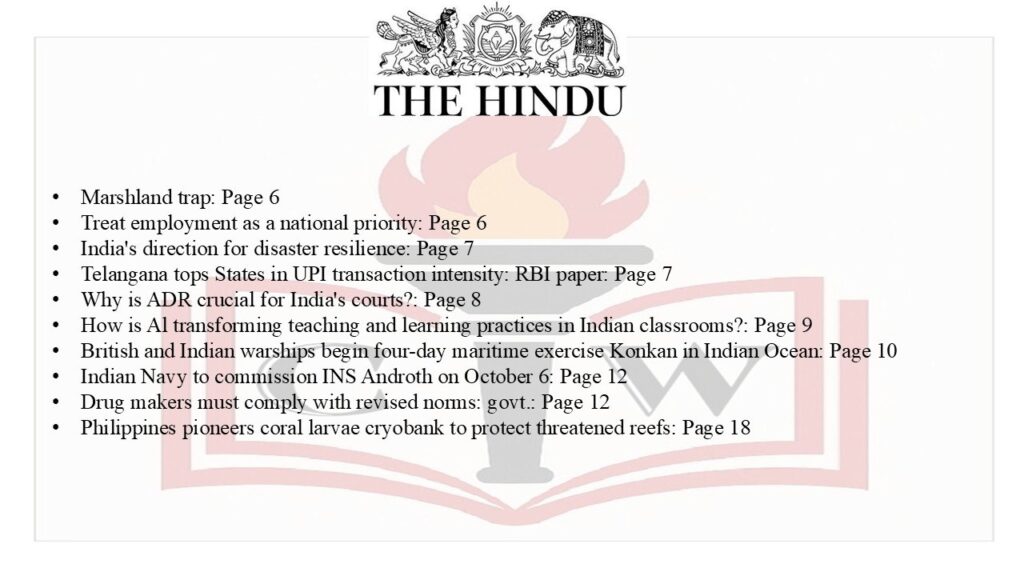
- “Ensure safeguards for India’s carbon market” (from ‘The Hindu’).
- “A start for North-South carbon market cooperation” (from ‘The Hindu’).
- “Should India take global leadership on climate change?” (from ‘The Hindu’).
- Trade & Global Economy:
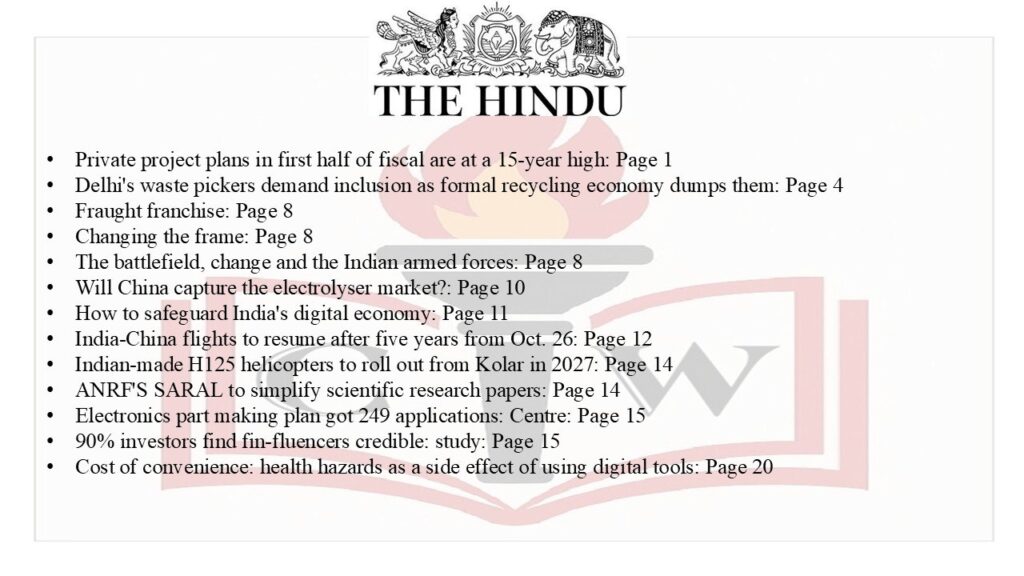
- “Indian iron and steel exporters face the highest CBAM levy” (from ‘The Hindu’).
- “India to expand trade agreement with 4 nation South American bloc” (from ‘The Indian Express’).
- Defence & Technology:
- “Tri-services to get systems, platforms for Rs.79,000 cr.” (from ‘The Hindu’).
- “‘90% of Gaganyaan development work done'” (from ‘The Hindu’).
I will structure the information to highlight the implications, policies, and global context for each issue.
Hello! I’ve executed the research for your next cluster of topics focusing on Economy, Environment, and International Relations. The key findings are detailed below, structured by the original headlines for easy reference.
🌎 Environment & Climate Finance
Ensure safeguards for India’s carbon market & A start for North-South carbon market cooperation
- India’s Carbon Market (ICM): The Carbon Credit Trading Scheme (CCTS), or ICM, is being developed to create a national framework for carbon credit trading.
- Safeguards Needed: Experts emphasize the necessity of strong safeguards within the CCTS to protect land rights, ensure community consent, and guarantee fair benefits to achieve climate justice alongside sustainable growth.
- North-South Cooperation (ICM-CBAM Linkage): India and the European Union (EU) are exploring the integration of the ICM with the EU’s Carbon Border Adjustment Mechanism (CBAM).
- Potential Breakthrough: The goal is to allow the carbon price paid in India to be deducted from the CBAM charges at the EU border, which could protect Indian exporters from double taxation and accelerate industrial decarbonization.
- Major Challenges: The linkage faces significant challenges due to the differences in market maturity and structure:
- Structural Gap: The EU’s market (ETS) uses absolute emission caps, while the ICM currently relies on intensity-based improvements and project offsets.
- Price Gap: EU carbon prices are significantly higher (€60–€80 per tonne) than India’s (€5–€10 per tonne).
- Political Contradiction: India has opposed CBAM at the WTO as a protectionist measure, creating a political contradiction by now agreeing to a linkage.
Should India take global leadership on climate change?
- Leadership Status: India is emerging as a key climate leader, having made significant progress in renewable energy expansion (reaching $\sim 242$ GW by October 2025) and co-founding global alliances like the International Solar Alliance (ISA) and the Coalition for Disaster Resilient Infrastructure (CDRI). India’s per capita emissions ($\sim 1.85$ t CO₂e/year) remain relatively low compared to the global average.
- Climate Pledges & Progress: India has updated its Nationally Determined Contribution (NDC) with targets to reduce the emissions intensity of GDP by 45% from 2005 levels by 2030 and aims for net-zero emissions by 2070.
- Challenges to Leadership:
- Emissions Growth: India reported the highest absolute increase in global GHG emissions in 2024, an increase of 3.6% from the previous year, although its per capita emissions are still below the world average.
- Coal Dependence: The country still lacks a clear coal phase-out plan, and coal’s share in total power generation remains high at around 75%.
- Rating: The Climate Action Tracker (CAT) currently rates India’s climate targets and action as “Highly insufficient” for alignment with the $1.5^\circ$C warming limit.
📈 Trade & Global Economy
Indian iron and steel exporters face the highest CBAM levy
- Financial Impact: An analysis found that Indian iron and steel exporters could face the highest CBAM fees among all similar exporters to the EU, potentially amounting to about €301 million (approximately ₹3,000 crore).
- Secondary Steel Sector Risk: The secondary steel sector, which is more carbon-intensive due to its use of energy-intensive methods like the Direct Reduction Electric Arc Furnace (DRI-EAF), is particularly vulnerable.
- Cost Increase: CBAM could impose an additional 25% carbon tax on Indian CBAM-covered goods exports to the EU.
- Strategic Response: The steel industry is proactively exploring market diversification to less stringent markets in Africa, Latin America, and the Middle East to mitigate the CBAM shock.
India to expand trade agreement with 4 nation South American bloc
- Expanded Trade Pact: India and the MERCOSUR bloc (comprising Brazil, Argentina, Uruguay, and Paraguay) have agreed to broaden the scope of their existing Preferential Trade Agreement (PTA).
- Key Expansion Details: The plan is to expand the PTA from its current 450 tariff lines to potentially 4,000 tariff lines.
- Objective: The expansion aims to boost bilateral trade with the MERCOSUR countries from its current level (USD 12.19 billion in 2024-25) to a target of USD 20 billion over the next five years.
- Significance: This move aligns with India’s strategy to diversify its trade portfolio, strengthen South-South cooperation, and gain enhanced market access to Latin America.
🛡️ Defence & Technology
Tri-services to get systems, platforms for Rs.79,000 cr.
- Acquisition Value: The Defence Acquisition Council (DAC), chaired by the Defence Minister, has granted Acceptance of Necessity (AoN) for capital acquisition proposals worth approximately ₹79,000 crore.
- Focus: The entire procurement is aligned with the ‘Aatmanirbhar Bharat’ (self-reliance) initiative, as all acquisitions will be undertaken under the ‘Buy (Indian–Indigenously Designed, Developed and Manufactured)’ category.
- Key Platforms Approved:
- Army: Nag Missile System (Tracked) Mk-II (NAMIS) for anti-tank warfare, and the Ground-Based Mobile ELINT System (GBMES) for electronic intelligence.
- Navy: Landing Platform Docks (LPDs) for amphibious warfare and disaster relief, and Advanced Light Weight Torpedoes (ALWT) for anti-submarine warfare.
- Air Force: Collaborative Long-Range Target Saturation/Destruction System (CLRTS/DS) to enhance long-range precision strike capabilities using autonomous technology.
‘90% of Gaganyaan development work done’
- Mission Goal: The Gaganyaan Mission aims to launch a 3-day manned mission to a $400 \text{ km}$ Low Earth Orbit (LEO) with a crew of three members.
- Progress: The program is at an advanced stage, with all essential hardware for the first uncrewed mission already at Sriharikota for integration. The first uncrewed mission, the G1 Mission, is scheduled before the end of the current financial year.
- Significance: Successful completion will place India in an elite group of nations (US, Russia, and China) with human spaceflight capability, lay the foundation for a sustained Indian human space exploration program, and foster national innovation.
- Challenges: Major challenges remain in ensuring crew safety and creating a reliable, Earth-like environment inside the crew module.